
Fayl:NAMA Machine d'Anticythère 1.jpg

Bu prevyuning hajmi: 672 × 599 piksel. Boshqa oʻlchamlari: 1 036 × 924 piksel.
Asl fayl (1 036 × 924 piksel, fayl hajmi: 207 KB, MIME tipi: image/jpeg)

Qisqa izoh
| Taʼrif |
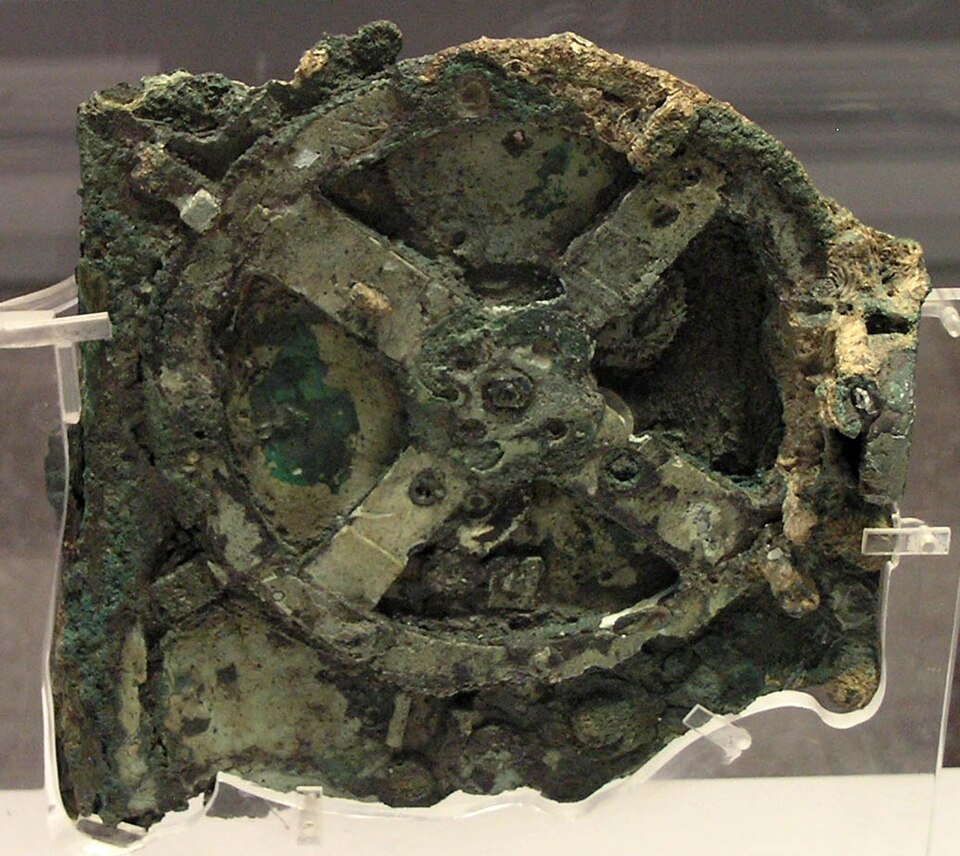
Italiano: Frammento principale della macchina di Anticitera. Il meccanismo consiste in un sistema complesso di 32 ruote e piastre con iscrizioni relative ai segni dello zodiaco e ai mesi. Lo studio dei frammenti suggerisce che si trattasse di una sorta di astrolabio utilizzato per la navigazione marittima. L’interpretazione oggi generalmente accettata risale agli studi del professor Derek de Solla Price, che fu il primo a suggerire che il meccanismo fosse una macchina per calcolare il calendario solare e lunare, ossia un ingegnoso strumento per determinare il tempo sulla base dei movimenti del Sole e della Luna, della loro relazione (eclissi) e dei movimenti delle altre stelle e pianeti conosciuti all’epoca. Il meccanismo fu probabilmente costruito da un abile meccanico della scuola di Posidonio a Rodi. Cicerone, che visitò l’isola nel 79/78 a.C., riferisce che tali dispositivi erano effettivamente progettati dal filosofo stoico Posidonio di Apamea. Il progetto del meccanismo di Anticitera sembra seguire la tradizione del planetario di Archimede e può essere collegato alle meridiane. Il suo funzionamento si basa sull’uso di ruote dentate. La macchina è datata intorno all’89 a.C. e proviene dal relitto rinvenuto al largo dell’isola di Anticitera. Museo Archeologico Nazionale, Atene, n. 15987. Français : Fragment principal de la machine d'Anticythère. Le mécanisme consiste en un système complexe de 32 roues et plaques portant des inscriptions relatives aux signes du zodiaque et aux mois. L'étude des fragments suggère qu'il s'agissait d'une sorte d'astrolabe utilisée pour la navigation maritime. L'interprétation désormais généralement acceptée remonte aux études du professeur Derek de Solla Price, qui fut le premier à suggérer que le mécanisme est une machine à calculer le calendrier solaire et lunaire, c'est-à-dire une machine ingénieuse pour déterminer le temps sur la base des mouvements du soleil et de la lune, leur relation (éclipses) et les mouvements des autres étoiles et des planètes connues à cette époque. Le mécanisme fut probablement construit par un mécanicien ingénieux de l'école de Poséidonios à Rhodes. Cicéron, qui visita l'île en 79/78 a. C. rapporte que de tels engins étaient en effet conçus par le philosophe stoïcien Poséidonios d'Apamée. La conception du mécanisme d'Anticythère paraît suivre la tradition du planétarium d'Archimède, et peut être reliée aux cadrans solaires. Son mode opératoire est basé sur l'utilisation de roues dentées. La machine est datée de 89 avant J.-C. environ et provient de l'épave trouvée au large de l'île d'Anticythère. Musée archéologique national, Athènes, n°15987.
Español: Fragmento principal de la máquina de Anticitera. El mecanismo consiste en un sistema complejo de 32 ruedas y placas con inscripciones relativas a los signos del zodiaco, meses, eclipses y juegos pan-Helénicos. El estudio de los fragmentos sugiere que se trataba de una especie de astrolabio utilizado para la navegación marítima. La interpretación más aceptada procede de los estudios del profesor Derek de Solla Price, que fue el primero en sugerir que el mecanismo es una calculadora del calendario solar y lunar, es decir, una máquina ingeniosa para determinar el tiempo basándose a los movimientos del sol y de la luna, su relación (eclipses) y los movimientos de otros planetas y estrellas conocidos en esa época. El mecanismo fue construido, probablemente, por un ingeniero mecánico de la escuela de Poséidonios en Rhodes. Cicerón, quien visitó la isla en el 79/78 a. C., cuenta que tales ingenios fueron, en efecto, concebidos por el filósofo Poseidonios de Apamea. La concepción del mecanismo de Anticitera parece seguir la tradición del planetario de Arquímedes, y puede estar relacionado con los cuadrantes solares. Su funcionamiento está basado en el uso de ruedas dentadas. La máquina data del 89 a. C. aproximadamente, y proviene del naufragio encontrado en la isla de Anticitera. Museo Arqueológico Nacional, Atenas, n°15987.
English: Main w:en:Antikythera mechanism fragment (fragment A). The mechanism consists of a complex system of 30 wheels and plates with inscriptions relating to signs of the zodiac, months, eclipses and pan-Hellenic games. The study of the fragments suggests that this was a kind of astrolabe. The interpretation now generally accepted dates back to studies by Professor w:en:Derek de Solla Price, who was the first to suggest that the mechanism is a machine to calculate the solar and lunar calendar, that is to say, an ingenious machine to determine the time based on the movements of the sun and moon, their relationship (eclipses) and the movements of other stars and planets known at that time. Later research by the Antikythera Mechanism Research Project and scholar Michael Wright has added to and improved upon Price's work.
The mechanism was probably built by a mechanical engineer of the school of Posidonius in Rhodes. Cicero, who visited the island in 79/78 B.C. reported that such devices were indeed designed by the Stoic philosopher Posidonius of Apamea. The design of the Antikythera mechanism appears to follow the tradition of Archimedes' planetarium, and may be related to sundials. His modus operandi is based on the use of gears. The machine is dated around 89 B.C. and comes from the wreck found off the island of Antikythera. National Archaeological Museum, Athens, No. 15987. العربية: الجزء الرئيس من آلة أنتيكيثيرا (الجزء A). تتألف الآلية من نظام معقد مكون من 30 عجلة ولوحة عليها نقوش تتعلق بعلامات الأبراج والشهور والكسوف والألعاب الهيلينية. تشير دراسة الشظايا إلى أنها كانت نوعاً من الإسطرلاب. يُردُّ التفسير المقبول الآن إلى دراسات البروفيسور ديريك دو سولا بريس، الذي كان أول من اقترح أن الآلة هي آلة لحساب التقويم الشمسي والقمري، أي آلة ذكية لتحديد الوقت بناءً على حركات الشمس والقمر وعلاقتهما (الكسوف) وحركات النجوم والكواكب الأخرى المعروفة في ذلك الوقت. وقد أضافت الأبحاث اللاحقة التي أجراها مشروع أبحاث آلية أنتيكيثيرا والباحث مايكل رايت إلى عمل برايس وحسّنته.
من المحتمل أن يكون مهندس ميكانيكي من مدرسة بوسيدونيوس في رودس هو من بنى هذه الآلة. وقد ذكر شيشرون، الذي زار الجزيرة في عام 79/78 قبل الميلاد، أن هذه الآلية صممها بالفعل الفيلسوف الرواقي بوسيدونيوس من أباميا. يبدو أن تصميم آلية أنتيكيثيرا يتبع تقليد القبة السماوية لأرخميدس، وقد يكون مرتبطاً بالساعات الشمسية. تعتمد طريقة عمل الآلة على استخدام التروس. يعود تاريخ الآلة إلى قرابة عام 89 قبل الميلاد، وهي مأخوذة من الحطام الذي عُثر عليه قبالة جزيرة أنتيكيثيرا. المتحف الأثري الوطني، أثينا، رقم 15987. |
| Sanasi | 20 dekabr 2005 (original upload date) |
| Manba | No machine-readable source provided. Own work assumed (based on copyright claims). |
| Muallif | No machine-readable author provided. Marsyas assumed (based on copyright claims). |
Litsenziyalash
I, the copyright holder of this work, hereby publish it under the following licenses:

|
Ushbu hujjatdan nusxa ko‘chirish, tarqatish va/yoki o‘zgartirish uchun GNU Erkin guvohnoma litsenziyasi (GNU Free Documentation License), 1.2 va har qanday keyingi versiyalar shartlariga muvofiq ruxsat berilgan yoki Ochiq kodli dasturlar jamiyati (Free Software Foundation) tomonidan chop etilgan; oʻzgarmas boʻlimlarsiz, oldingi muqova matnlari va orqa muqova matnlarisiz. Litsenziya nusxasi GNU Erkin guvohnoma litsenziyasi (GNU Free Documentation License) boʻlimiga kiritilgan. |
  
|
Bu fayl Creative Commons asosida litsenziyalangan Attribution- Share Alike 3.0 Unported litsenziyasi. | |
| ||
| This licensing tag was added to this file as part of the GFDL licensing update. |
This file is licensed under the Creative Commons Attribution 2.5 Generic license.
- Siz erkinsiz:
- ulashishga – ishlanmani nusxalash, tarqatish va uzatish
- remiks qilishga – ishni moslashtirishga
- Quyidagi shartlar asosida:
- atribut – Siz tegishli litsenziyaga havolani taqdim etishingiz va oʻzgartirishlar kiritilganligini koʻrsatishingiz kerak. Siz buni har qanday oqilona yoʻl bilan qilishingiz mumkin, lekin litsenziar Sizni yoki Sizning foydalanishingizni ma'qullashini taklif qiladigan tarzda emas.
Siz oʻzingiz xohlagan litsenziyani tanlashingiz mumkin.
| Annotations | This image is annotated: View the annotations at Commons |
Fayl tarixi
Faylning biror paytdagi holatini koʻrish uchun tegishli sana/vaqtga bosingiz.
| Sana/Vaqt | Miniatura | Oʻlchamlari | Foydalanuvchi | Izoh | |
|---|---|---|---|---|---|
| joriy | 15:48, 2005-yil 20-dekabr | | 1 036 × 924 (207 KB) | wikimediacommons>Marsyas | Fragment principal de la machine d'Anticythère. Le mécanisme consiste en un système complexe de 32 roues et plaques portant des inscriptions relatives aux signes du zodiac et aux mois. L'étude des fragments suggère qu'il s'agissait d'une sorte d'astr |
Fayllarga ishoratlar
Bu faylga quyidagi 3 sahifalar bogʻlangan:
